
Recherche
Les recherches les plus fréquentes :
On 21 November, the HuMUS project held its Final Conference at the European Committee of the Regions, bringing together around 100 participants, including 25 speakers and representatives from the project’s pilot sites. The event was enriched by 11 posters, each illustrating the diversity, depth and territorial impact of HuMUS’ work across Europe. Organised by Agroecology Europe and moderated by ANCI Toscana, the conference marked an important milestone in the advancement of participatory soil governance.
You can find the programme and objectives : here
HuMUS: A European Partnership for Soil Health
HuMUS is a European consortium funded through Horizon Europe, as part of the EU Mission “A Soil Deal for Europe”.
The project employs a cascade funding mechanism (Financial Support to Third Parties – FSTP), enabling beneficiaries to redistribute part of their EU grant to local actors, thereby fostering experimentation and grassroots innovation in soil governance.
HuMUS has demonstrated how participatory, inclusive and replicable approaches can pave the way toward healthier soils and stronger communities.
The Contribution of Lille Metropole – The REVALS Project
At the conference, Ms Jamila Bentrar, Coordinator of Quartiers Fertiles at Lille Metropole, presented the results of the REVALS project – (RE)veal and (V)alorise (L)ife of (S)oils) – a locally driven initiative financed through the European Union’s HuMUS programme (2023-2025).
Led in partnership with Coop des Communs and the Ferme urbaine du Trichon, REVALS builds on a long-term collective effort to restore degraded soils and establish a new urban farm (ferme du Trichon)in Roubaix (one of the 95 municipalities of Lille Metropole). Its ambition is to make visible – and measurable – the value generated through soil restoration so that it can be fully reflected in public decision-making.
REVALS highlights how municipalities can play a decisive role in protecting soil health while supporting economic, social and environmental development.
Ecological Accounting as a Decision-Support Tool
A central component of REVALS is the mobilisation of ecological accounting based on the CARE methodology (Comprehensive Accounting in Respect of Ecology). This approach enables stakeholders to account for the true value of healthy soils, and to integrate ecological and human dimensions into business models and investment decisions.
A Governance Charter Anchored in Collective Action
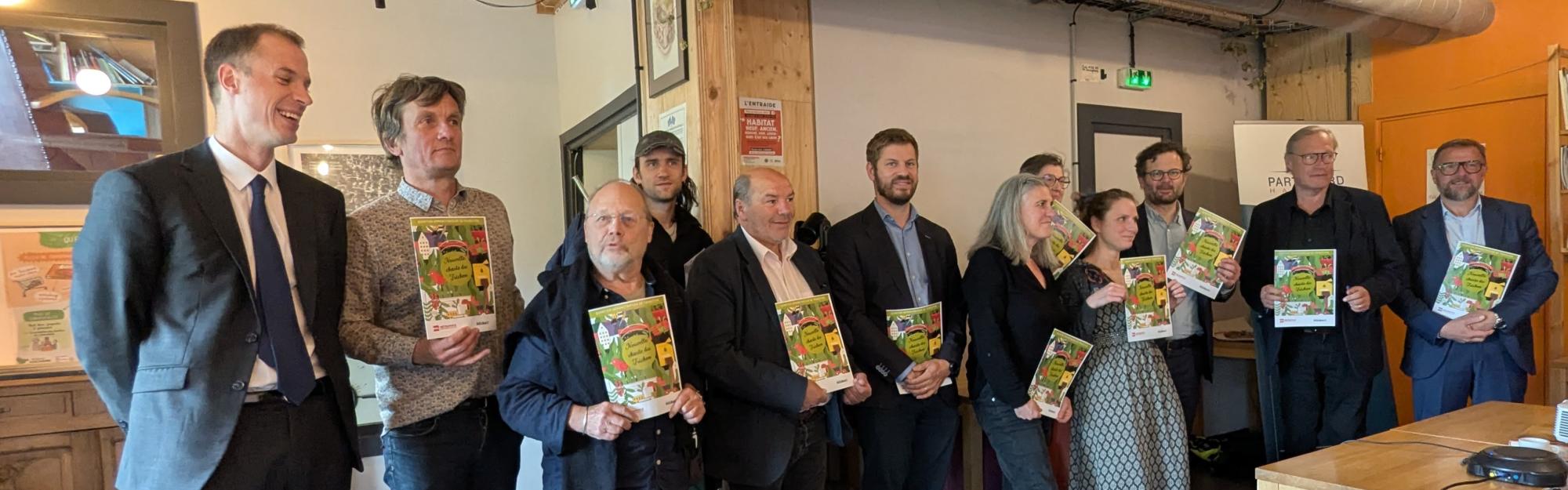
On 6 June 2025, all partners gathered in Roubaix to sign a new governance charter – the “Nouvelle Charte du Trichon”. This federal agreement demonstrates how a coalition of actors can jointly restore soil functions, promote healthy and local food systems, and contribute to broader social and economic objectives. Its core message is clear: the strength of the project lies in its collective governance. Addressing soil degradation requires shared responsibility, as the benefits – and the challenges – are common to all.
The project also examined the economic frameworks underpinning soil-related activities. A key distinction emerged between:
- Inherited debt – referring to pre-existing soil pollution or degradation;
- Internal debt – associated with the initial stages of any economic activity, ideally followed by profit.
Thus activities linked to soil restoration should not be borne solely by a single operator – such as an urban farm – but should instead be addressed collectively.
Conclusion
The Conference reaffirmed that sustainable soil management is not merely an environmental priority, but a cornerstone of territorial resilience, social wellbeing and long-term economic vitality.
By fostering shared governance models, strengthening the scientific and methodological foundations for soil restoration, and enabling local actors to experiment through European funding, the project has laid the groundwork for a lasting transformation in how soils are valued and protected.


